Share
Dispatch from the 9th floor
 ‌ ‌ ‌ ‌ ‌ ‌ ‌ ‌ ‌ ‌ ‌ ‌ ‌ ‌ ‌ ‌ ‌ ‌ ‌ ‌ ‌ ‌ ‌ ‌ ‌ ‌ ‌ ‌ ‌ ‌ ‌ ‌ ‌ ‌ ‌ ‌ ‌ ‌ ‌ ‌ ‌ ‌ ‌ ‌ ‌ ‌ ‌ ‌ ‌ ‌ ‌ ‌ ‌ ‌ ‌ ‌ ‌ ‌ ‌ ‌ ‌ ‌ ‌ ‌ ‌ ‌ ‌ ‌ ‌ ‌ ‌ ‌ ‌ ‌ ‌ ‌ ‌ ‌ ‌ ‌ ‌ ‌ ‌ ‌ ‌ ‌ ‌ ‌ ‌ ‌ ‌ ‌ ‌ ‌ ‌ ‌ ‌ ‌ ‌ ‌ ‌ ‌ ‌ ‌ ‌ ‌ ‌ ‌ ‌ ‌ ‌ ‌ ‌ ‌ ‌ ‌ ‌ ‌ ‌ ‌ ‌ ‌ ‌ ‌ ‌ ‌

View in browser

Proof Points

A newsletter from The Hechinger Report

iconSupport nonprofit news

I was in Washington last week, attending a course in education finance at the McCourt School of Public Policy at Georgetown University. The lectures were held on the ninth floor of a stunning aluminum and glass building near Judiciary Square. Forgive me if I was perhaps occasionally distracted by the floor-to-ceiling windows, brilliant sunlight and a sweeping panorama of the U.S. Capitol. Higher ed’s view rivals those of K Street lobbyists.


I wanted to share a few facts about school funding that surprised even many educators in the room.

1. High poverty doesn’t always mean low funding

Camden, New Jersey, a high-poverty city, spends about $37,000 per student, not that different from what some wealthy school districts spend. Scarsdale, New York, for example, spends $36,000 per pupil. Meanwhile, some middle class districts in Idaho and Utah spend closer to $9,000 per student. The national average is around $17,000 per pupil. We often hear how low-income districts are underfunded, but some states steer extra funds to poor communities, above and beyond federal Title I funding for low-income students. That federal funding can exceed $1,000 per eligible child. The rest comes from local and state governments.

2. Why math teachers lose out on the pay scale

Math is the lowest-paid teaching specialty not because math is undervalued but because salaries are tied to years on the job. High turnover keeps average pay lower, and math teachers often leave for private sector jobs where they can earn significantly more.

3. There are a lot more adults in schools

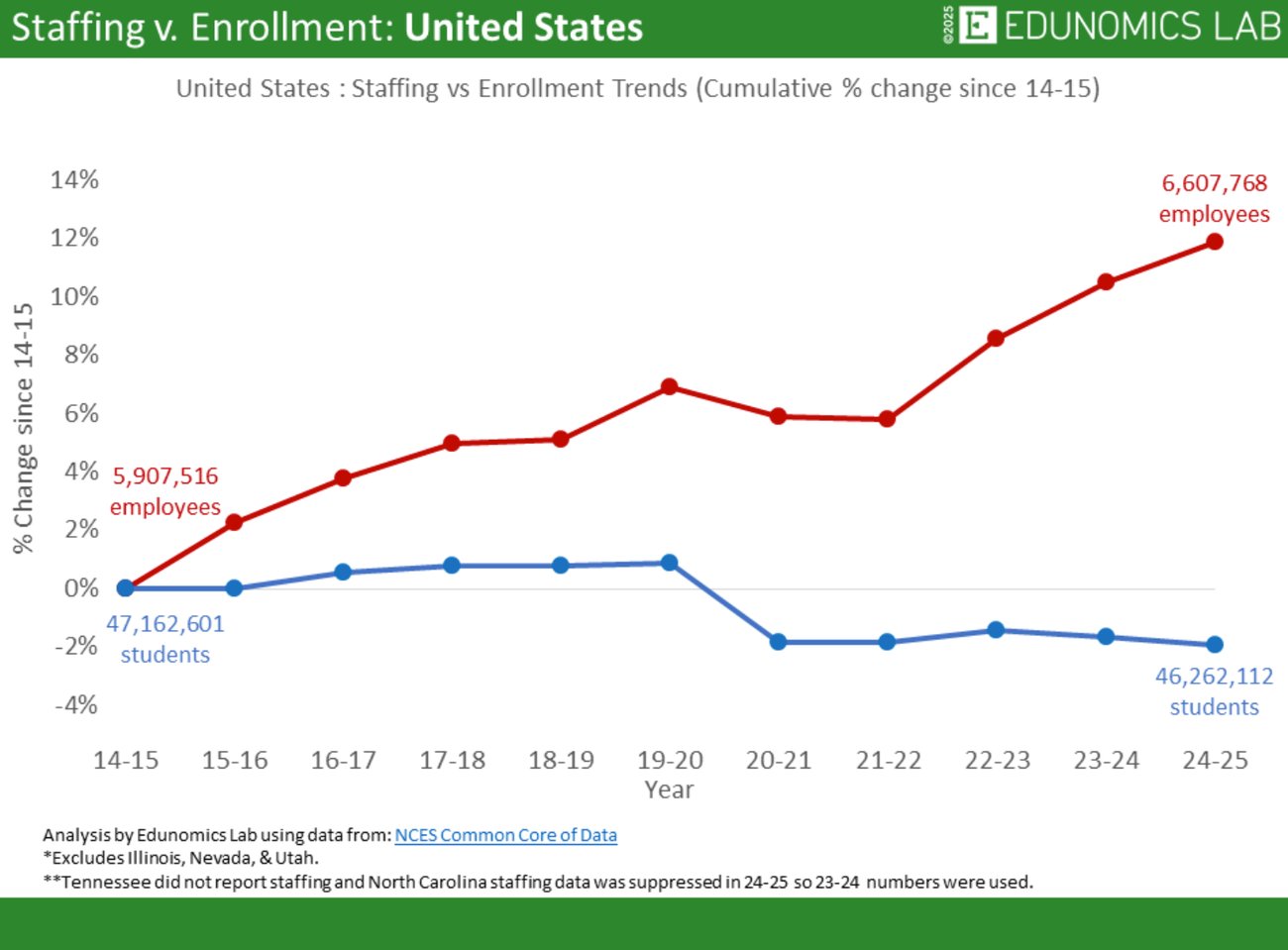
There are about 14 adults for every 100 students today, up from 12.5 adults a decade ago. The biggest staffing expansion came in the 1980s with special education mandates. Since then, schools have expanded their “middle management” layer. Today, there are more assistant principals, tech officers, reading coordinators and other staffers. These roles often pull the best teachers out of the classroom. Staff-to-student ratios have also grown because there are fewer students. Annual U.S. births have been declining since 2007.


These staffing levels are financially unsustainable as the number of students in schools continues to decline. Marguerite Roza, director of the Edunomics Lab at Georgetown, predicts layoffs ahead.

Sponsor this newsletter


When you sponsor a newsletter from The Hechinger Report, you reach educators, families and decision makers. Learn more from our sponsorship page or email sponsorships@hechingerreport.org.

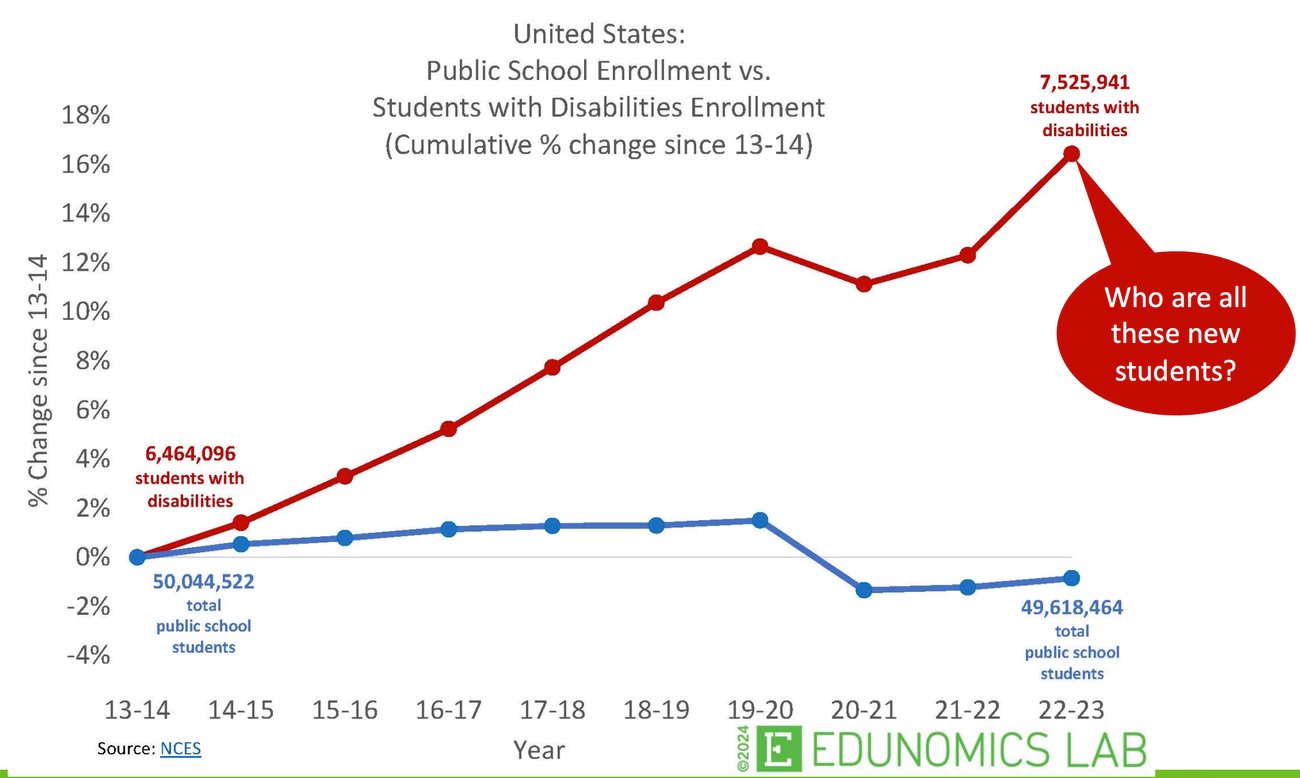
4. The number of children with disabilities is soaring 


Autism diagnoses have risen, but that’s not what’s driving overall growth. Much of the increase is in dyslexia; its math equivalent, dyscalculia; and ADHD diagnoses. 


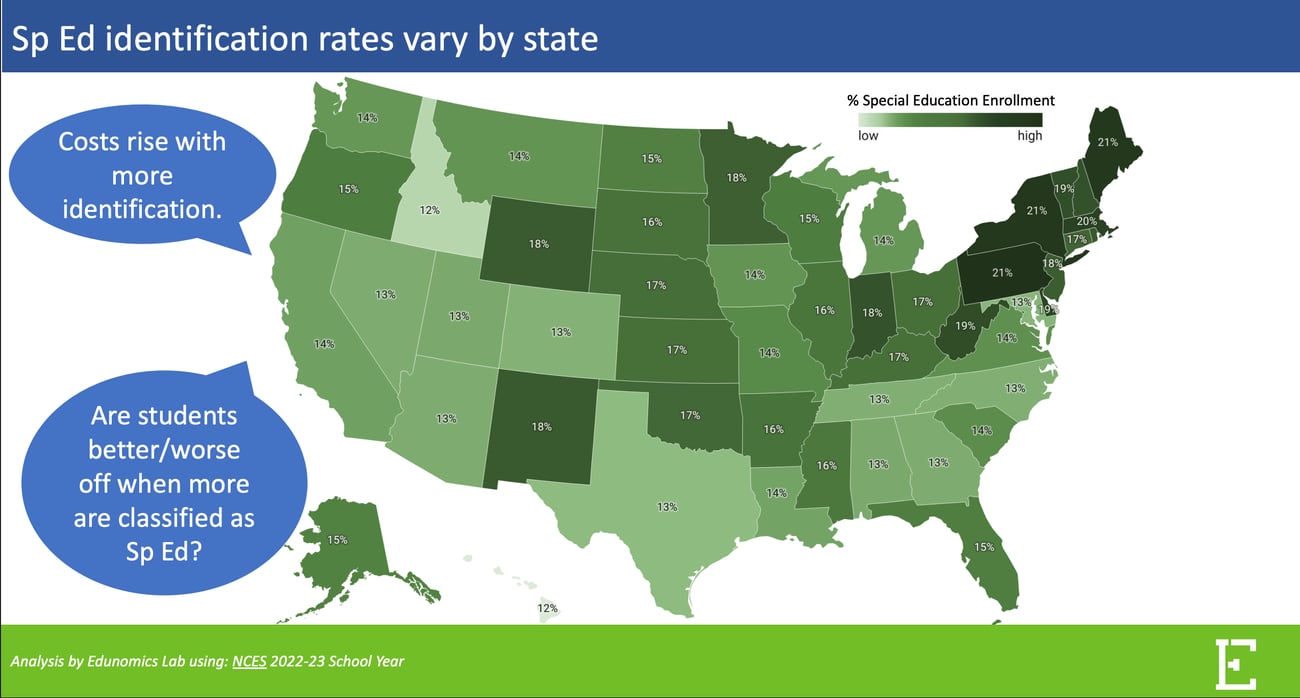
Moreover, the disability numbers differ enormously by state. In New York, more than 20 percent of students are classified as having disabilities. In California, it is less than 15 percent. 


It’s hard to believe children’s brains change that much at state borders. We should expect some variation in disability rates by poverty; maternal health and environmental exposure matter. But that doesn’t explain rates this divergent. 


This is what I’m most curious about right now: Why do disability rates change so dramatically across state lines? Why do some states and school districts hire so many more adults to care for these children? And are the services helping students? I’ll be digging deeper and sharing more as I go.

Is this edition of the newsletter helpful?

➡️ Your feedback helps us keep this newsletter relevant to your interests. Share your thoughts with us directly.

Invite others to sign up for our newsletters.

Donate

Copyright © 2026 The Hechinger Report, All rights reserved.

Click here to manage your newsletter preferences


Email Marketing by ActiveCampaign